
Ashtabula County Three-Day Records
No official Sheriff page supplies an Ashtabula County 72-hour release list, rolling window, public fields, update cadence, photo flag, or retention rule. The official County Jail page identifies the agency, but it is not a roster. Ask Sheriff's Records for events in an exact 72-hour range.
A three-day request can span a weekend or uncertain date. That is its value. It is not evidence of a special weekend publication schedule, because none is documented. Include transfers as well as releases so a move to another custodian is not mislabeled as community discharge.
Check Ashtabula Three-Day Releases
Start with the last known custodian. The county jail, two city holding facilities, Lake Erie Correctional Institution, NEOCAP, and Geauga overflow do not share one county-wide release list. A request sent to the wrong office may find no record even when another agency recorded the event.
- Identify the facility that last held the person.
- Set a 72-hour Eastern Time start and end.
- Request release and transfer entries with timestamps and disposition definitions.
- Ask for the authorizing court and any receiving agency.
- Reconcile the event with the court docket and a VINE update if the agency participates.
Use Released Last 24 Hours when only today's events matter. For one named person whose date or facility is unclear, use the Ashtabula County released-inmate search paths.
Ashtabula Three-Day Record Fields
Because there is no online feed, these are requested source fields rather than claims about a public display. Ask narrowly enough to tie each event to a custody episode.
| Field | Purpose |
|---|---|
| Name and booking ID | Identifies the custody episode. |
| Release or transfer time | Places the event inside the range. |
| Disposition and code meaning | Distinguishes bond, completion, or handoff. |
| Releasing facility | Names the custodian ending control. |
| Court and case number | Links the event to legal authority. |
| Receiving agency | Shows whether confinement continued. |
Bond does not mean dismissal. Time served means custody was credited toward an imposed term. Sentence completion can still be followed by probation. Transfer means the first facility's custody ended while another agency took control.
Ashtabula Weekend Release Ranges
A 72-hour interval helps when the likely event crossed a weekend, holiday, or midnight boundary. It does not justify guessing when staff process or post records. No official Ashtabula County weekend-release adjustment or local lag schedule was found.
Use actual timestamps. If a court entry falls inside the range but the jail event does not, ask whether the order awaited processing, another hold, or transport. A court order and physical release are separate milestones. Likewise, a name disappearing from one facility may reflect an interagency transfer rather than a delayed community release.
For county-jail sentences, consult the sentencing entry, commitment, jail-credit calculation, and release event. Do not apply ODRC prison earned-credit rules to a county term. ODRC records are relevant only when state custody or Adult Parole Authority supervision is involved.
Ashtabula Three-Day Fallbacks
Call Sheriff's Records at 440-576-3545 for the primary jail at 25 W. Jefferson St., Jefferson, OH 44047. Contact the municipal custodian for a city-jail event. Read the court docket for authority. Use VINE as a participating-agency status or notification channel, then confirm the result. Use ODRC only for state custody or supervision.
A focused public-record request should give the person's name, known identifiers, exact interval, and requested fields. Asking for all inmate records can sweep in exempt or unrelated material and slow the response. No third-party aggregator can establish the official update cadence or retention period that the Sheriff does not publish.
- Community release
- Custody ends without a handoff to another jail or prison.
- Transfer
- One agency ends custody by delivering the person to another.
- Discharge
- A custodial or supervision status ends under recorded terms.
Prove Ashtabula Three-Day Events
Ashtabula's absence of a roster or release archive makes three-source reconciliation the distinctive local method. Obtain the release or transfer event for the exact range. Read the authorizing court entry. Add VINE only when a participating agency reports a matching status change.
The sources answer different questions. The log shows when physical custody ended. The docket shows legal authority. VINE provides notice, not a certified archive. Agreement can support a timeline; disagreement signals a need to contact the originating offices.
The official jail page documents the source location and absence of a public three-day feed.
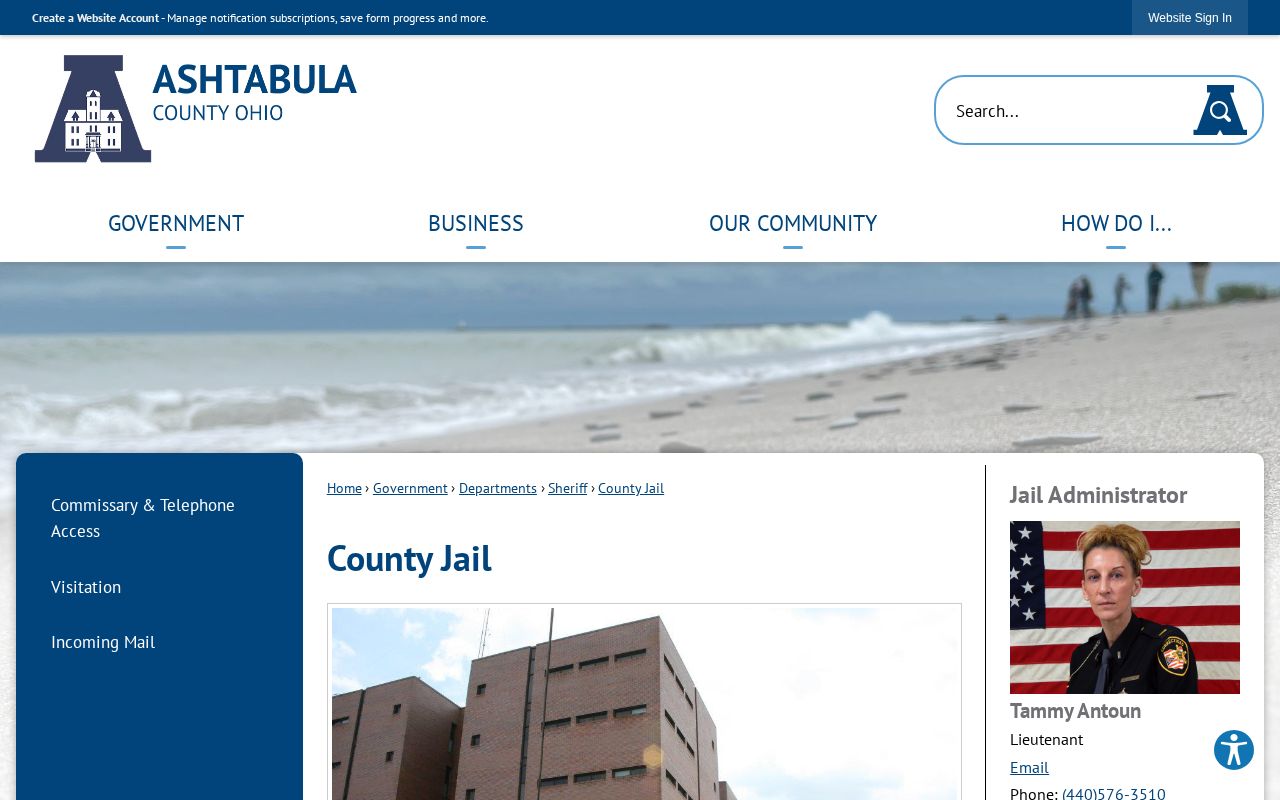
The screenshot supports a records-request route instead of an invented online filter.
Route Ashtabula Three-Day Searches
The custody map is split among record keepers. Ashtabula County Jail handles county custody in Jefferson. Ashtabula City and Conneaut City maintain short-term holding records. Lake Erie Correctional Institution reports through ODRC. NEOCAP events belong in the sentencing-court, probation, and program trail. Geauga County Safety Center may hold county inmates under an overflow arrangement.
A 72-hour interval can contain more than one agency event. The Jefferson log may show a transfer near the start while Geauga later records a release. Follow each handoff and keep the timestamp, facility, and disposition from every custodian.
A county transfer to ODRC is not a prison discharge. It begins or continues state custody. ODRC's offender detail may later show “APA Supervision” or “Released.” Use those fields only for the state phase.
Reconcile Ashtabula Release Dates
Build an event line from the records: court action, jail processing, physical release or transfer, and any receiving-agency intake. These milestones can occur on different dates. A three-day range can reveal that sequence without pretending they were one event.
Bond means the case continues outside jail. Time served means the court credited confinement toward a term. Sentence completion can still be followed by probation. A detainer pickup indicates continued control by another authority.
Ask for code definitions. Also seek the booking identifier, commitment time, authorizing court, case number, receiving agency, and any linked property receipt. The property record may show whether belongings went to the person or a receiving officer, but it supports rather than replaces the event log.
Compare Ashtabula Event Times
Compare each event to the interval rather than when someone first heard of it. A VINE alert can follow the source event. A clerk entry can precede jail processing. Transport can place the next intake after the first transfer. Keep each timestamp distinct and confirm it with the office that created it.
A precise timeline also prevents a weekend range from hiding the difference between a court order and the jail's physical release. Both can be correct while bearing different dates.
Preserve the time zone and the record label with each timestamp. Admission, court filing, release authorization, jail discharge, transport, and receiving-agency intake are separate points. If a request crosses daylight-saving time, a holiday, or a month boundary, write the dates and local times in full. That level of detail lets the records officer run a narrow query and helps explain why two otherwise accurate systems display different days.
For an older event, ask whether the relevant log remains under the office's current retention schedule. Ohio law does not set one universal online period, and Ashtabula publishes no roster archive to measure. A missing web entry therefore cannot settle the matter. The originating agency's retained record, the court docket, and any receiving-custodian record form the stronger chain.